

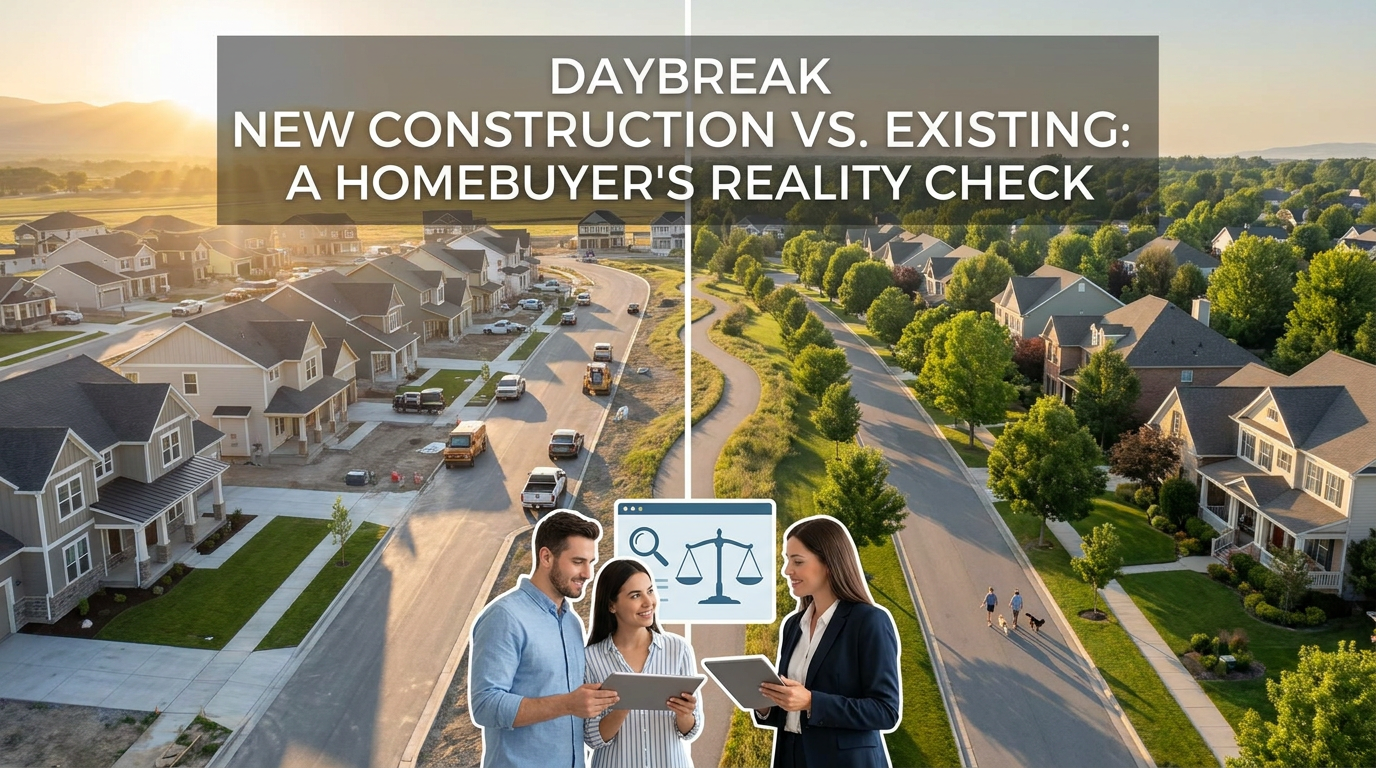
Daybreak New Construction vs. Existing: A Homebuyer's Reality Check
Deciding between a new build or an existing home in Daybreak, South Jordan? Get the unfiltered pros and cons to make an informed choice.
Daybreak New Construction vs. Existing: A Homebuyer's Reality Check
The smell of freshly cut timber and wet paint is unmistakable, standing in sharp contrast to the lived-in, settled aroma of an older property. For anyone house hunting in Daybreak, South Jordan, this isn't just a sensory difference—it’s the biggest fork in the road you'll face: do you go with new construction or an existing home?
It’s a choice that feels monumental, and frankly, the stakes are high. Forget the glossy brochures and the staging for a moment. Let’s look at the raw, unvarnished truth of both paths.
The Allure of the Blank Slate: Daybreak’s New Builds
There is a specific kind of magic in being the first. You’re the first one to bake cookies in that oven, the first to shower in that bathroom, and the first to hang a picture on those pristine walls. But beyond the "new car smell," new construction is really about control.
Daybreak’s builders offer a level of customization that’s hard to beat. You aren't just buying a house; you’re picking the quartz, the wide-plank flooring, and the cabinet styles. It’s a dream for anyone who cringes at the thought of inheriting someone else’s questionable 2005 design choices (we’ve all seen those Tuscan-themed kitchens that didn't age well).
Beyond the looks, new homes are technical marvels compared to houses built just a decade ago. We’re talking high-efficiency HVAC systems, advanced insulation, and double-pane windows that actually keep the Utah winter outside. This isn't just "eco-friendly" fluff; it’s a monthly discount on your utility bills. Plus, the peace of mind that comes with a builder’s warranty is huge. If the water heater dies in month six, it’s the builder’s problem, not your bank account's. Many of our client reviews mention that this safety net was the deciding factor for them, especially for those without a massive "emergency repair" fund.
The Reality Check: New construction is not an exercise in instant gratification. You are buying a promise on a blueprint. Delays aren't just a possibility; they are practically a rite of passage. Whether it's a window shipment stuck in transit or a sudden labor shortage, your move-in date is often written in pencil.
Then there’s the "sticker shock." That base price you see on the sign? It doesn't include the "must-have" upgrades, the landscaping, the refrigerator, or even the blinds. By the time you’ve finished the design center meetings, that "affordable" mortgage might have grown by $40,000. You also have to be okay with living in a construction zone for a while. It takes time for trees to grow and for that "barren lot" feel to turn into a real neighborhood.
The Charm of the Established: Daybreak’s Settled Neighborhoods
When you walk into an existing home in Daybreak, you’re stepping into a finished story. There’s a "settled" vibe that you just can’t manufacture. The trees actually provide shade, the gardens have filled in, and the neighbors already have their Friday night porch traditions. What you see is exactly what you get. No guessing how the lot next door will look—it’s already there.
Value is the big draw here. While new construction carries a "premium" price tag just for being new, existing homes often give you more bang for your buck. You might find a larger lot, a finished basement, or a prime location near the lake for the same price as a tiny new build on the outskirts. Speed is another win; you can usually close and move in within 30 to 45 days. No waiting on a framing crew. Plus, the previous owners likely already did the hard work of installing the fence, the blinds, and the backyard patio.
The Reality Check: Existing homes come with "character," which is sometimes code for "the roof is twelve years old." Even with a solid home inspection, you have to be ready for the unexpected. That 15-year-old furnace might decide to quit during a January cold snap. You also have to live with—or pay to change—the previous owner’s taste. If they loved lime green accent walls and quirky tile, that’s your first weekend project. You’ll also likely pay more in monthly utilities because older homes simply don’t hold the heat as well as the new airtight models.
The Community Factor
It’s easy to focus on the four walls, but in Daybreak, the "where" matters as much as the "what." New construction usually means you're on the cutting edge of the community's expansion. It’s exciting to be part of something growing, but amenities like parks or nearby retail might still be months or years away.
In the established parts of Daybreak, the social fabric is already woven. You know where the best food trucks park and which elementary school your kids will attend. You can walk the streets at 6:00 PM and get a real sense of the neighborhood’s pulse before you ever sign a contract.
The Bottom Line: Which is Yours?
There isn’t a "right" answer here—only the right answer for you.
If you want a home that’s an energy-efficient masterpiece tailored to your specific taste, and you don’t mind a 6-to-10 month wait, go with a new build. Just keep a buffer in your budget for those design center upgrades.
However, if you want a bigger yard, a settled neighborhood, and a move-in date that’s just weeks away, the existing market is your best bet. Just make sure you have a "fix-it" fund ready for when that older appliance eventually gives up the ghost.
Ultimately, whether you’re the first person to turn the key or the third, the goal is the same: finding a place in Daybreak that actually feels like home. Doing your homework now is what ensures that feeling lasts long after the moving boxes are unpacked.