

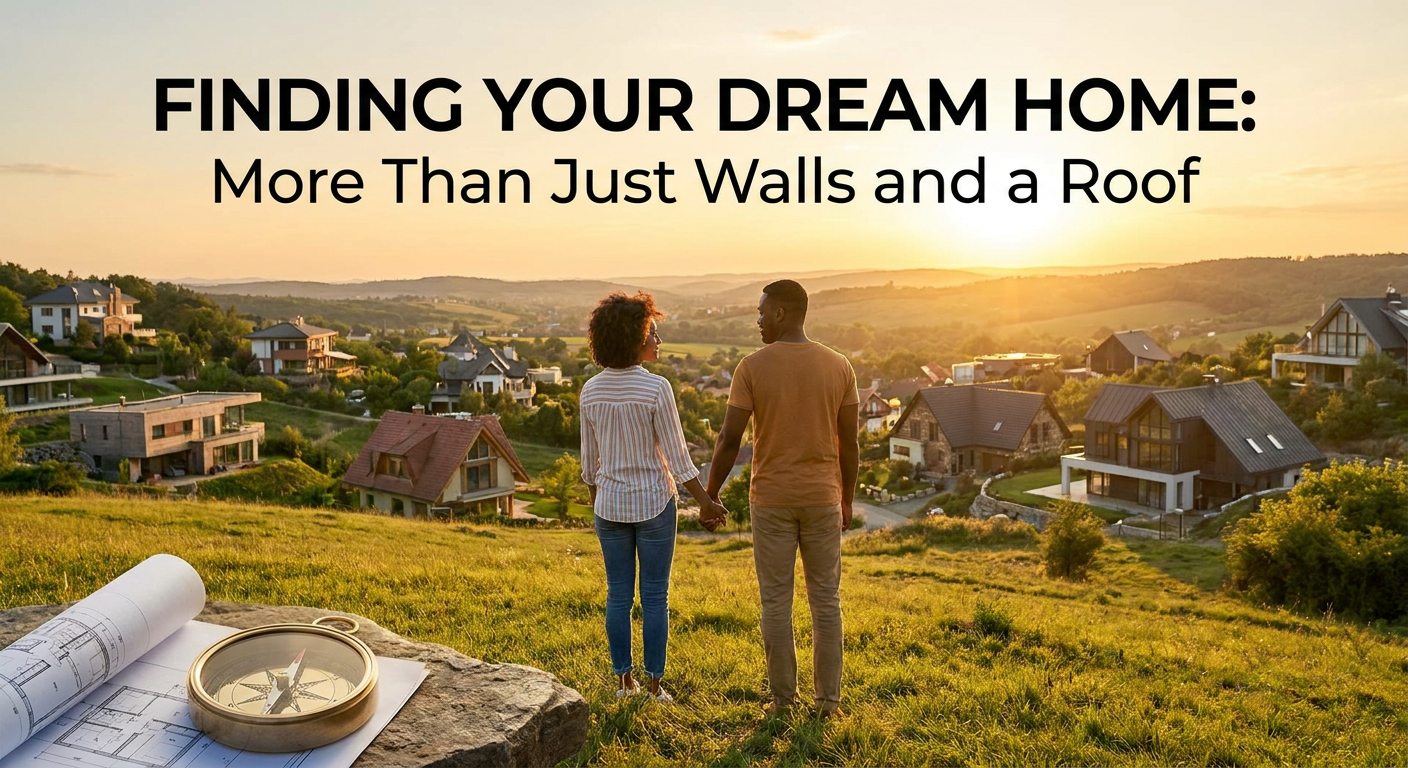
Finding Your Dream Home: More Than Just Walls and a Roof
Your dream home is about community. Discover how Daybreak, South Jordan, offers an unparalleled living experience that extends beyond the front door. We explore the tangible benefits of a connected neighborhood.
A few years back, I walked a couple, Sarah and Mark, through a stunning, nearly-new build in Daybreak. The house had everything on their checklist: granite countertops, a sprawling backyard, and enough bedrooms for their growing family. Yet, something felt off. Sarah, typically effusive, was quiet. Finally, she blurted out, "This is beautiful, but… where are the people?" It was a sterile, isolated cul-de-sac in another development, and she realized then that her dream home wasn't just about the house itself. It was about the life lived around it. It was about the rhythmic hum of a community, the impromptu chats with neighbors, and the feeling of belonging. My experience, over two decades in real estate, has consistently shown me that the "dream home" isn't a stagnant structure; it's a dynamic ecosystem of connection and shared experiences.
The Illusion of Isolation: Why Your Square Footage Isn't Enough
I've seen countless families meticulously measure every inch of a prospective living room, scrutinize kitchen appliances, and even map out commute times to the second. All crucial factors, no doubt. But here's an uncomfortable truth: a disproportionate focus on internal amenities can lead to an empty fulfillment. Imagine owning a state-of-the-art home in a neighborhood where children play alone in their yards, where neighbors wave from behind closed garage doors, and where the only shared space is the asphalt street. That's not the life many envision when they think of settling down.
Consider a recent study by the National Association of Realtors, which found that access to high-quality public spaces and community amenities ranked nearly as high as interior features for prospective homebuyers, especially among millennials and Gen Z. Another fascinating data point from the University of Michigan indicates that individuals who perceive strong neighborhood ties report significantly higher levels of happiness and lower rates of depression – roughly 20% higher happiness scores compared to those in isolated areas. This isn't just about feeling good; it's about measurable improvements in well-being. A home in Daybreak, South Jordan, for instance, isn't just a place to sleep; it’s a launchpad for a richer, more engaged life.
Daybreak's Blueprint: A Different Kind of Neighborhood
When we talk about community, it's rarely a happy accident. In Daybreak, it's a meticulously crafted design philosophy. It's walking out your front door and having a network of trails literally at your feet, not a busy thoroughfare. It's knowing that your kids can bike to a friend's house or to one of the over 30 miles of trails and not fear getting lost in traffic. This isn't some romanticized ideal; it's the tangible reality of living in a master-planned community where every park, every coffee shop, and every shared green space is intentionally integrated to foster interaction.
The developers didn't just plop down houses; they built a framework for life. Think about it: when was the last time you saw a neighborhood where the local elementary school was designed to be a community hub, not just a building with classrooms? Where a central lake (Oquirrh Lake, a 67-acre gem) isn't just a pretty view but a vibrant center for paddleboarding, kayaking, and community events? This deliberate design pushes people outdoors and into shared experiences, organically creating connections that generic suburban sprawl often misses entirely.
I often tell clients that Daybreak is like moving into a small town where everything is new and thoughtfully designed. You get the benefits of modern infrastructure and diverse housing options, but with the old-fashioned charm of a place where people know their neighbors. It's a striking counterpoint to the endless rows of identical houses found in so many other places.
The 'Porch Test': How True Connection Unfolds
My litmus test for a truly connected community isn't the number of block parties (though Daybreak has plenty). It's what I call the "porch test." When you walk through a neighborhood, do you see people sitting on their porches, waving, chatting? Or are the porches empty, decorative facades? In Daybreak, particularly in the older village centers, you often see neighbors gathered, children playing in front yards that seamlessly blend into shared green spaces. This isn't happenstance; it's intentional. The homes are designed with welcoming front porches, and the streetscapes are crafted to slow traffic and encourage pedestrian life.
One of the most impressive statistics I've encountered regarding Daybreak is its resident satisfaction rate. Over 90% of residents report feeling a strong sense of community and connection, according to internal surveys conducted by the development. That's not just a statistic; it's a testament to a successful model. This isn’t a sales pitch; it's a observation of how the built environment shapes our social lives. When you move to Daybreak, you're not just buying a property; you’re investing in a lifestyle that actively cultivates connection.
Beyond the Barbecue: The Economic Perks of Community Engagement
While the emotional benefits of community are profound, let's not overlook the practical, even financial, advantages. A strong community often correlates with better-maintained properties, higher property values, and a more stable real estate market. Think about it: motivated, engaged neighbors are more likely to look out for each other's homes, report suspicious activity, and participate in neighborhood improvement initiatives. This collective stewardship translates into tangible value.
For example, studies by the Project for Public Spaces organization have repeatedly shown that well-designed public spaces, which are abundant in Daybreak, can increase surrounding property values by as much as 30%. It’s not simply about aesthetics; it’s about utility and desirability. When you have access to a network of parks, community gardens, recreation centers, and a thriving village center within walking distance, it adds an intrinsic value that can't be replicated by a larger kitchen island. This integrated approach elevates your entire living experience and, critically, protects your investment.
The Unseen Architecture: Designing for Spontaneous Interaction
So, what does this all mean for finding your dream home? It means looking beyond the four walls. It means asking yourself, "What kind of life do I want to live outside this house?" In Daybreak, the architecture extends beyond buildings; it encompasses the pathways, the parks, the village greens, and even the carefully curated events calendar. It’s an unseen architecture that fosters spontaneous interaction – the kind that leads to lasting friendships, shared childcare, and potluck dinners on a Tuesday.
I've seen the transformation in countless clients. They come looking for a house, and they often stay because they've found a home – a true sense of belonging. The dream isn't just about a perfect floor plan; it's about the feeling of waking up in a place where you're known, supported, and surrounded by a vibrant tapestry of life. That, to me, is the ultimate measure of a successful move. It’s what makes Daybreak, South Jordan, so much more than just another housing development; it’s a living testament to the power of community.